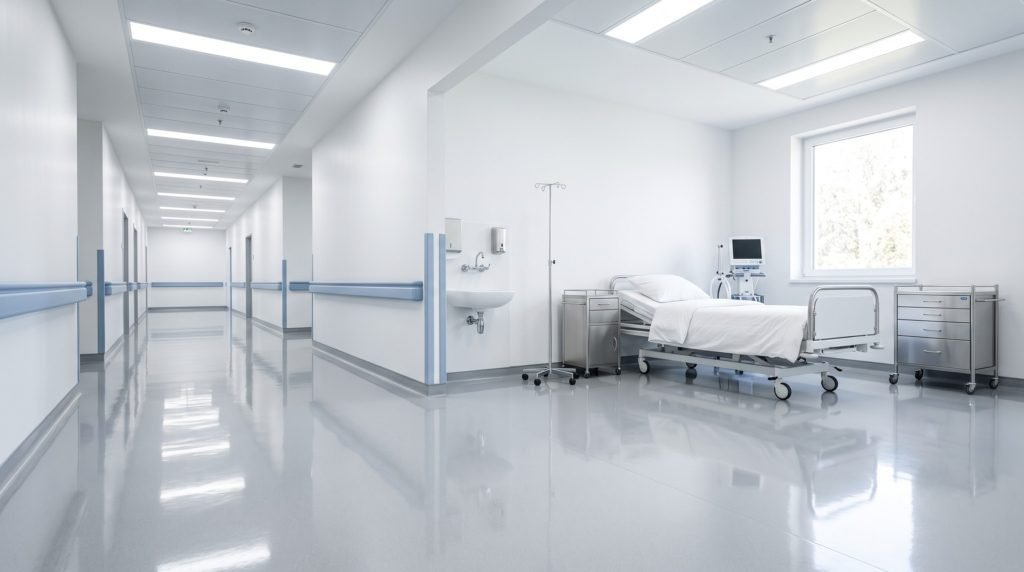
Operating a large-scale healthcare facility or private hospital requires an uncompromising, relentless commitment to patient safety and infection prevention. Therefore, when facility managers and directors of nursing need to guarantee a sterile environment, partnering with highly specialized hospital cleaning Gold Coast and Brisbane services is absolutely critical. Specifically, high-acuity medical environments constantly battle the transmission of severe healthcare-associated infections (HAIs), superbugs, and airborne pathogens. In this comprehensive guide, we break down the critical risks lurking in medical wards and outline the exact clinical-grade disinfection processes required to eradicate them. Ultimately, investing in a certified medical cleaning team safeguards vulnerable patients, protects your frontline healthcare workers, and ensures your hospital easily passes stringent government health audits.
3 Critical Infection Risks in Modern Healthcare Facilities
Standard visual cleanliness is completely irrelevant in a medical setting; a surface can look spotless while hosting millions of microscopic pathogens. Consequently, hospital administrators must identify and neutralize the specific pathways where cross-contamination occurs most rapidly.
- 1. High-Touch Surface Pathogen Transfer: First, bed rails, call buttons, IV poles, and door handles are touched hundreds of times a day by different staff, patients, and visitors. Therefore, failing to execute rigorous, hospital-grade disinfection on these specific touchpoints creates an immediate superhighway for viral transmission.
- 2. Cross-Contamination Between Wards: Second, moving from a highly infectious isolation room to a general surgical ward presents massive biological risks. Accordingly, you must deploy strict color-coded zoning protocols to ensure that equipment used in a bio-hazard area never enters a sterile recovery zone.
- 3. Operating Theatre Turnover Failures: Finally, surgical suites require absolute sterility between procedures to prevent post-operative infections. Consequently, without rapid yet meticulous terminal cleaning processes, hospitals face severe patient health consequences and massive surgical delays.
Our Signature 4-Step Clinical Disinfection Process
To guarantee an entirely sterile, compliant, and patient-ready healthcare environment, professional clinical technicians execute a highly calibrated, multi-stage sanitization strategy.
Step 1: Isolation, Zoning, and PPE Protocols
Safety for both the cleaning staff and the patients dictates the entire process. As a result, strict barrier protocols must be established before a single chemical is applied.
- Experts immediately establish safety perimeters, donning the required Personal Protective Equipment (PPE) dictated by the specific ward’s infection risk level.
- Technicians organize their color-coded microfiber cloths and specialized mop heads to absolutely guarantee zero cross-contamination between different hospital zones.
Step 2: High-Level Surface Disinfection
Chemical efficacy is heavily dependent on proper application techniques and precise contact times. Consequently, professionals must apply targeted, TGA-approved hospital-grade solutions.
- We meticulously wipe down all patient-care items, medical monitors, and high-touch architectural surfaces using powerful, non-corrosive disinfectants.
- The chemical is intentionally left to “dwell” on the surface for the exact timeframe required to completely destroy resilient bacteria like MRSA and VRE.
Step 3: Clinical Floor Scrubbing and Bio-Hazard Control
Hospital floors absorb massive amounts of biological fluids, harsh iodine spills, and heavy foot traffic. Therefore, industrial extraction is absolutely non-negotiable for a hygienic result.
- We utilize ultra-quiet, HEPA-filtered commercial vacuums to remove fine dust and respiratory irritants without disturbing resting patients.
- Next, we deploy specialized auto-scrubbers with microbial neutralizers to deeply sanitize the vinyl and linoleum floors, removing all biological hazards safely and efficiently.
Step 4: Terminal Cleaning and Quality Verification
When an infectious patient is discharged, the room must undergo a complete “terminal clean” to reset the space for the next admission. Therefore, the final verification dictates the safety of the room.
- We conduct a top-to-bottom sanitization, including wall washing, curtain changing, and deep mattress disinfection.
- Finally, our clinical supervisors utilize advanced ATP (Adenosine Triphosphate) fluorescent testing swabs to scientifically verify that the surfaces are 100% biologically sterile before releasing the room back to the triage nurses.
The Hidden Dangers of Using Standard Commercial Cleaners in a Hospital
When seeking to reduce facility budgets, some administrators mistakenly hire standard office cleaning contractors for clinical spaces. However, understanding the severe limitations of basic janitorial services helps you avoid catastrophic compliance failures.
The Cross-Contamination Hazard: Standard commercial cleaners often use the same bucket and string mop for an entire floor, dragging bacteria from the public washrooms directly into patient recovery rooms. As a result, this immediately spikes HAI rates. Conversely, certified healthcare cleaners utilize single-use, color-coded microfiber systems that are strictly isolated to specific risk zones.
Chemical Ignorance and WHS Breaches: Domestic janitors generally use cheap, fragrant chemicals that only mask odors and fail to kill resilient hospital superbugs. Furthermore, these untrained workers frequently mishandle designated clinical waste and sharps bins, exposing the hospital to massive Work Health and Safety (WHS) liabilities. In contrast, professional hospital cleaning Gold Coast and Brisbane specialists are rigorously trained in medical waste compliance, strictly utilizing TGA-approved, broad-spectrum disinfectants.
Frequently Asked Questions
Are your cleaning teams trained in infection control protocols?
Yes, absolutely. Specifically, every technician deployed to a healthcare facility undergoes rigorous, specialized training in cross-contamination prevention, PPE usage, and strict adherence to Australian health and safety standards.
Do you provide rapid response cleaning for infectious outbreak situations?
Yes, we do. Furthermore, we offer emergency outbreak response teams equipped to handle deep terminal cleaning for scenarios involving gastrointestinal viruses, influenza, or other highly contagious infectious diseases.
Can your teams operate quietly around resting patients?
We prioritize patient comfort and recovery above all else. However, we still deliver a flawless clean by utilizing specialized ultra-quiet HEPA vacuums and training our staff to operate with minimal disruption, empathy, and absolute discretion on the wards.
Secure Your Hospital with KM Mittal Cleaning Services
Attempting to maintain clinical hygiene using untrained standard commercial cleaners is incredibly risky and endangers your patients. However, by trusting your healthcare facility to our highly trained clinical specialists, you protect your medical staff and secure total regulatory compliance across South East Queensland.
In conclusion, at KM Mittal Cleaning Services, we know exactly how to execute a flawless, medical-grade sanitization strategy. Therefore, we bring the hospital-grade chemicals, certified training, and premium care you need to maintain a world-class healthcare environment.
Ready for a flawlessly sterile hospital facility?
- Contact Us: kmcleaners.com.au/contact
- Location: Pimpama, QLD 4209
- Phone: 0402 622 210
- Email: info@kmcleaners.com.au


