Carpet Cleaning Guide for Homes with Pets
Owning pets brings immense joy, but it also often comes with the challenge of keeping your carpets pristine. Pet accidents, shedding, and general dander can lead to unsightly stains and lingering odors. This comprehensive carpet cleaning guide for homes with pets will equip you with the knowledge and techniques to maintain a fresh and hygienic living environment for both you and your furry companions.
Understanding Pet-Related Carpet Issues
Pets introduce unique challenges to carpet maintenance. From the inevitable accidents to tracked-in dirt and shedding fur, carpets can quickly become a breeding ground for bacteria and unpleasant smells. Understanding the nature of these issues is the first step towards effective pet stain removal and odor neutralization.
Common Pet Stains and Their Origins
Urine, feces, and vomit are the most common culprits behind pet stains. These substances contain proteins and acids that can permanently damage carpet fibers if not addressed promptly. Furthermore, their strong ammonia scent can attract pets back to the same spot, creating a persistent problem. Muddy paw prints and shedding fur also contribute to overall carpet soiling.
The Science Behind Pet Odors
Pet odors are often more complex than simple surface dirt. Urine, for instance, contains uric acid crystals that don’t fully dissolve in water. When humidity levels rise, these crystals can reactivate, releasing that characteristic ammonia smell. Effective pet odor removal requires breaking down these odor-causing molecules at their source, not just masking them.
Essential Tools and Supplies for Pet Owners
To tackle pet-related carpet issues effectively, having the right arsenal of tools and supplies is crucial. Investing in quality products can make a significant difference in achieving a truly clean and fresh carpet.
Choosing the Right Cleaning Solutions
When selecting carpet cleaning pets solutions, prioritize enzyme-based cleaners. These cleaners contain beneficial bacteria that break down organic matter, effectively eliminating stains and odors from their source. Avoid harsh chemicals, as they can damage carpet fibers, fade colors, or even be harmful to your pets. Always test any new cleaner in an inconspicuous area first.
Equipment for Deeper Cleaning
Beyond basic cleaning solutions, a few pieces of equipment can significantly enhance your carpet cleaning pets efforts. A wet/dry vacuum is invaluable for quickly extracting liquid spills. For more stubborn stains and deep-seated odors, a portable carpet extractor or steam cleaner can be a worthwhile investment. Regular vacuuming with a good quality vacuum cleaner, equipped with a HEPA filter, is also paramount for removing pet hair and dander.
Step-by-Step Guide to Pet Stain and Odor Removal
Addressing pet stains and odors promptly is key to preventing them from becoming permanent. Follow these steps for effective removal:
Immediate Action for Fresh Stains
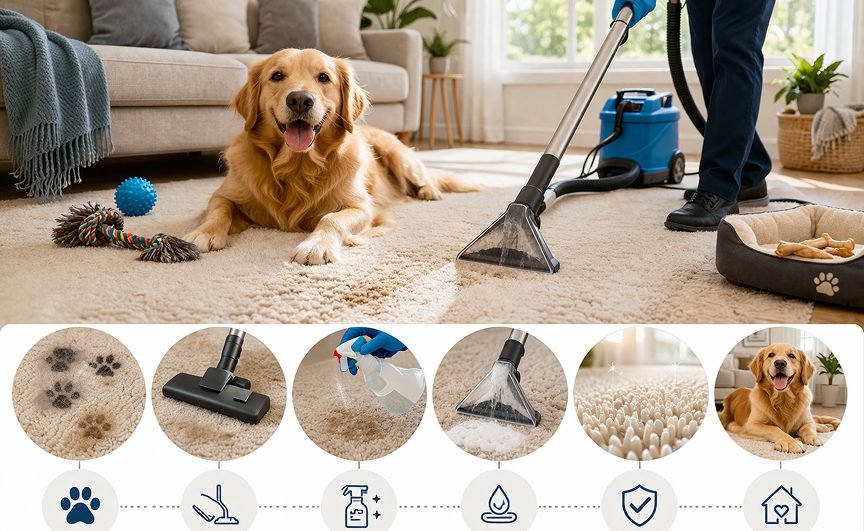
- Blot, Don’t Rub: For liquid accidents, immediately blot the area with clean, absorbent cloths or paper towels. This prevents the stain from spreading deeper into the carpet fibers.
- Apply an Enzyme Cleaner: Generously apply an enzyme-based cleaner to the affected area. Ensure the cleaner saturates the stain and extends slightly beyond its borders.
- Allow Dwell Time: Let the enzyme cleaner work its magic. Follow the product’s instructions for dwell time, which can range from 15 minutes to several hours.
- Blot Again and Rinse: Blot up any excess cleaner. You can then lightly rinse the area with clean water and blot dry thoroughly.
Tackling Old or Set-In Stains
For older or set-in stains, a slightly more intensive approach may be necessary. Pre-treating the stain with a specialized pet stain remover, followed by a thorough cleaning with your carpet extractor, can often lift these stubborn marks. Repeat the process if needed.
Eliminating Lingering Odors
Persistent pet odors often require more than just surface cleaning. After addressing stains, use an odor-neutralizing spray designed for pet odors. For severe cases, consider a professional deep clean or the use of a carpet deodorizing powder that can be vacuumed up after a set period. Baking soda is also a natural and effective odor absorber that can be sprinkled on carpets and vacuumed up.
Preventing Future Pet-Related Carpet Problems
Prevention is always better than cure. Implementing a few proactive strategies can significantly reduce the occurrence of pet-related carpet issues.
Regular Grooming and Maintenance
Regularly brushing your pets, especially those with long fur, can drastically reduce shedding. Keeping their nails trimmed can also prevent snags and tears in your carpet fibers. Moreover, wiping your pets’ paws after outdoor excursions, particularly in wet or muddy conditions, will minimize tracked-in dirt.
Establishing a Potty Routine
For puppies and senior pets, a consistent potty routine is essential. Frequent trips outside, especially after waking up, eating, and playing, can minimize indoor accidents. Reward successful outdoor potty breaks with praise and treats.
Frequently Asked Questions About Carpet Cleaning Pets
Q1: What is the best way to remove fresh pet urine stains from carpets?
A1: For fresh pet urine stains, the best approach is to blot up as much liquid as possible immediately, then apply an enzyme-based cleaner generously to saturate the area. Allow it to dwell according to product instructions before blotting dry.
Q2: How can I prevent my pet from soiling the carpet again in the same spot?
A2: Thoroughly clean the area with an enzyme cleaner to eliminate all odor traces. Then, you can try using a pet repellent spray or placing a piece of foil over the spot temporarily to deter your pet from returning to that area.
Q3: Are commercial carpet cleaning products safe for homes with pets?
A3: Many commercial carpet cleaning products are safe, but it’s crucial to choose those specifically designed for carpet cleaning pets. Always opt for enzyme-based cleaners and ensure the product is non-toxic and residue-free once dry. Always check product labels for pet safety.
Q4: How often should I deep clean my carpets if I have pets?
A4: If you have pets, it’s advisable to deep clean your carpets at least twice a year. More frequent cleaning, perhaps quarterly, may be necessary depending on the number and type of pets you own and their shedding habits.
Q5: Can I use baking soda for pet odor removal on my carpets?
A5: Yes, baking soda is an excellent natural absorbent for pet odor removal. Sprinkle it liberally over the carpet, let it sit for several hours or overnight, and then vacuum it up thoroughly.
Q6: What’s the difference between pet stain removal and pet odor removal?
A6: Pet stain removal focuses on lifting the visible mark left by the accident. Pet odor removal targets the underlying odor-causing molecules, such as uric acid, which may remain even after the stain is gone. Enzyme cleaners are crucial for both.
Conclusion: Maintaining a Fresh Home for You and Your Pets
Maintaining a clean and fresh home environment is vital for the well-being of both pet owners and their beloved animals. By understanding the specific challenges that pets present to your carpets and by employing the right techniques and products for carpet cleaning pets, you can effectively tackle stains and odors.
Regular grooming, consistent cleaning routines, and prompt attention to accidents will ensure your carpets remain hygienic and odor-free, allowing you to fully enjoy the companionship of your furry family members without the worry of dirty carpets.