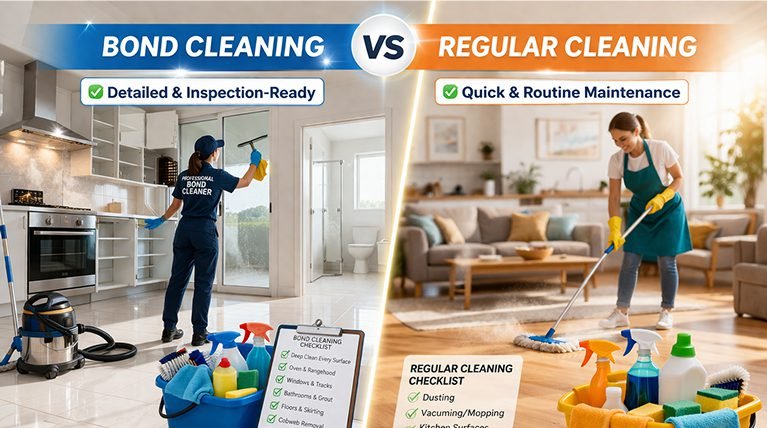
Bond Cleaning vs Regular Cleaning – Key Differences
When transitioning between rental properties, a common point of confusion arises regarding the scope and intensity of cleaning required. Understanding the fundamental distinctions between bond cleaning vs regular cleaning is paramount, particularly for tenants aiming to secure the full return of their security deposit.
While regular cleaning maintains a property’s everyday tidiness, bond cleaning is a far more exhaustive, deep-level clean designed to restore a property to its original condition, or as close as practically possible.
The Purpose and Scope of Bond Cleaning
Bond cleaning, also known as vacate cleaning or end-of-lease cleaning, is specifically mandated by landlords or real estate agents upon a tenant’s departure. Its primary objective is to ensure the property is immaculately clean, meeting a professional standard that reassesses the property’s state before the tenant’s occupation. This typically involves a comprehensive checklist covering every nook and cranny of the residence, from ceiling corners to grout lines.
What Bond Cleaning Entails
A professional bond cleaning service goes beyond superficial tidying. It includes tasks such as:
- Deep oven and cooktop cleaning: Removing baked-on grease and food residue.
- Exhaust fan and range hood degreasing: Ensuring these are free from oil buildup.
- Internal window cleaning: Washing glass, tracks, and frames.
- Skirting board and wall spot cleaning: Eradicating scuff marks and grime.
- Carpet steam cleaning: To remove stains and general wear.
- Grout and tile cleaning: Restoring bathrooms and kitchens to their former glory.
- Blinds and curtain cleaning: Dusting and removing stains.
- Cobweb removal: From all accessible areas, including high ceilings.
- Fixture and fitting polishing: Ensuring taps, handles, and light switches are spotless.
The emphasis is on restoring the property to a pristine state, addressing areas often overlooked during routine maintenance.
Understanding Regular Cleaning
Regular cleaning, conversely, is the routine maintenance of a living space. It focuses on hygiene and presentability for day-to-day living. This type of cleaning typically involves:
- Vacuuming and mopping floors.
- Wiping down kitchen countertops and sinks.
- Cleaning bathroom surfaces (toilets, sinks, showers).
- Dusting furniture and accessible surfaces.
- Emptying bins.
The goal of regular cleaning is to keep the property comfortable and hygienic, not to achieve a professional, move-out standard.
Key Differences Summarised
| Feature | Bond Cleaning | Regular Cleaning |
| :—————— | :———————————————– | :——————————————— |
| Objective | Property restoration for bond return | Daily hygiene and presentability |
| Scope | Deep, exhaustive, detailed | Superficial, surface-level |
| Frequency | Upon vacating a rental property | Weekly, fortnightly, or as needed |
| Intensity | High; often requires professional service | Moderate; can be DIY |
| Areas Covered | All aspects, including hidden areas and appliances | High-traffic areas and visible surfaces |
| Cost Implication| Higher; specialist services are often required | Lower; manageable for individual budgets |
Why the Distinction Matters for Tenants
For tenants, the bond cleaning vs regular cleaning difference is critical. Failing to meet the landlord’s expectations for bond cleaning can result in deductions from your security deposit. Landlords and agents are looking for a property that appears as it did when you moved in, minus normal wear and tear. Regular cleaning, while important, simply won’t satisfy these stringent requirements.
Navigating End-of-Lease Requirements
Always consult your lease agreement and the exit condition report. These documents will outline the specific cleaning expectations. Engaging a reputable bond cleaning service can provide peace of mind, ensuring all aspects of the property are addressed professionally and efficiently. [Consider looking into professional end of lease cleaning services for your next move.]
Conclusion: Maximising Your Bond Return
In summary, the core difference between bond cleaning vs regular cleaning lies in their purpose and depth. While regular cleaning keeps your home tidy, bond cleaning is an intensive, restorative process designed to meet the strict requirements of a property handover.
By understanding and acting on these distinctions, tenants can significantly increase their chances of a full bond deposit return. Investing in a professional bond clean, if necessary, is often a wise financial decision that averts larger deductions.
—
Frequently Asked Questions About Bond Cleaning vs Regular Cleaning
Q1: What is the main difference between bond cleaning and regular cleaning?
The primary difference lies in their purpose: bond cleaning aims to restore a property to a near-original condition for bond return, while regular cleaning maintains daily cleanliness.
Q2: Does bond cleaning include exterior window cleaning?
Generally, bond cleaning focuses on internal cleaning, including windows. Exterior cleaning may be an additional service or depend on the specific agreement.
Q3: How often should I do regular cleaning?
Regular cleaning frequency depends on household size and lifestyle, but weekly or fortnightly is common for most homes.
Q4: Is bond cleaning more expensive than regular cleaning?
Yes, due to its depth and thoroughness, bond cleaning typically costs more than a standard regular cleaning session.
Q5: Can I do my own bond cleaning to save money?
You can, but it requires meticulous attention to detail and often professional-grade products and equipment to meet the required standard.
—
Ready to make your next move seamless? Don’t let cleaning stress mar your bond return. Contact us today for a comprehensive bond cleaning quote and ensure you get your full deposit back!